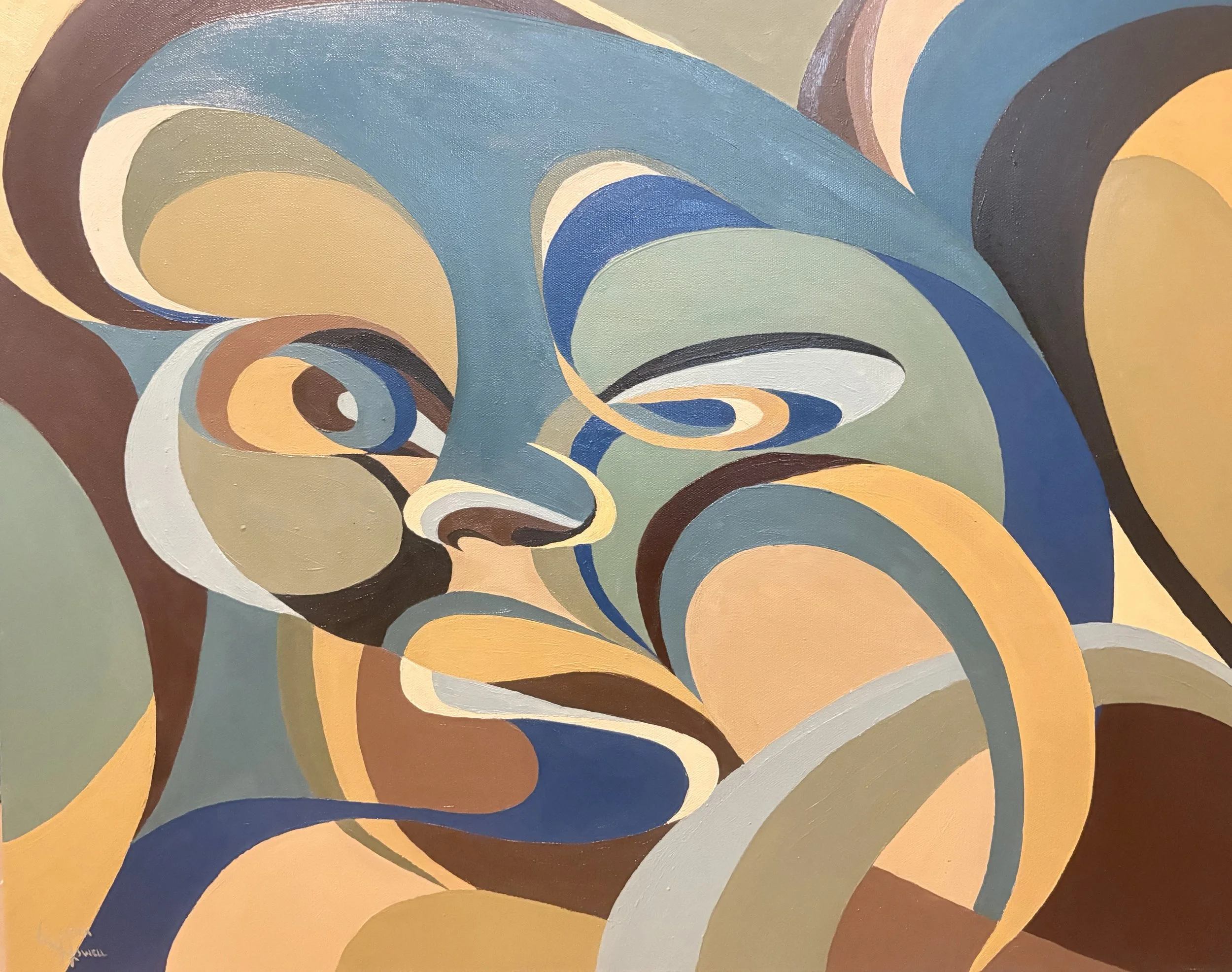
PAREIDOLIA
noun
par·ei·do·lia
tendency to perceive a specific, often meaningful image in a random or ambiguous visual pattern
Where does humanity begin and where does it end?
In this series, I explore the ideas of humanity and consciousness. Pareidolia is a phenomenon where meaning is perceived from an objectively meaningless or ambiguous stimulus. More often than not, we, as humans, will see a human face in a formation of objects or shapes. Faces can be seen on cars, with their headlights and grills. More complex would be portrait paintings. The portraits may not be ambiguous, but they are not human- they are paintings. I’m drawn to understand where the line is between a random assortment of shapes and the perceived human face.
I’m delving into this concept under the wider context that we are living in, during the exponential proliferation of AI. Conversations are being had regarding AI’s ability to gain consciousness, begging the question: Where does consciousness begin and where does it end? Also, is consciousness only limited to humans?